
Kameeldoring: why it’s the king of braai wood
Bone dry, seriously hot and famous for its coals. Here’s how to braai with Kameeldoring, and how to keep its heat in check in a closed stove.
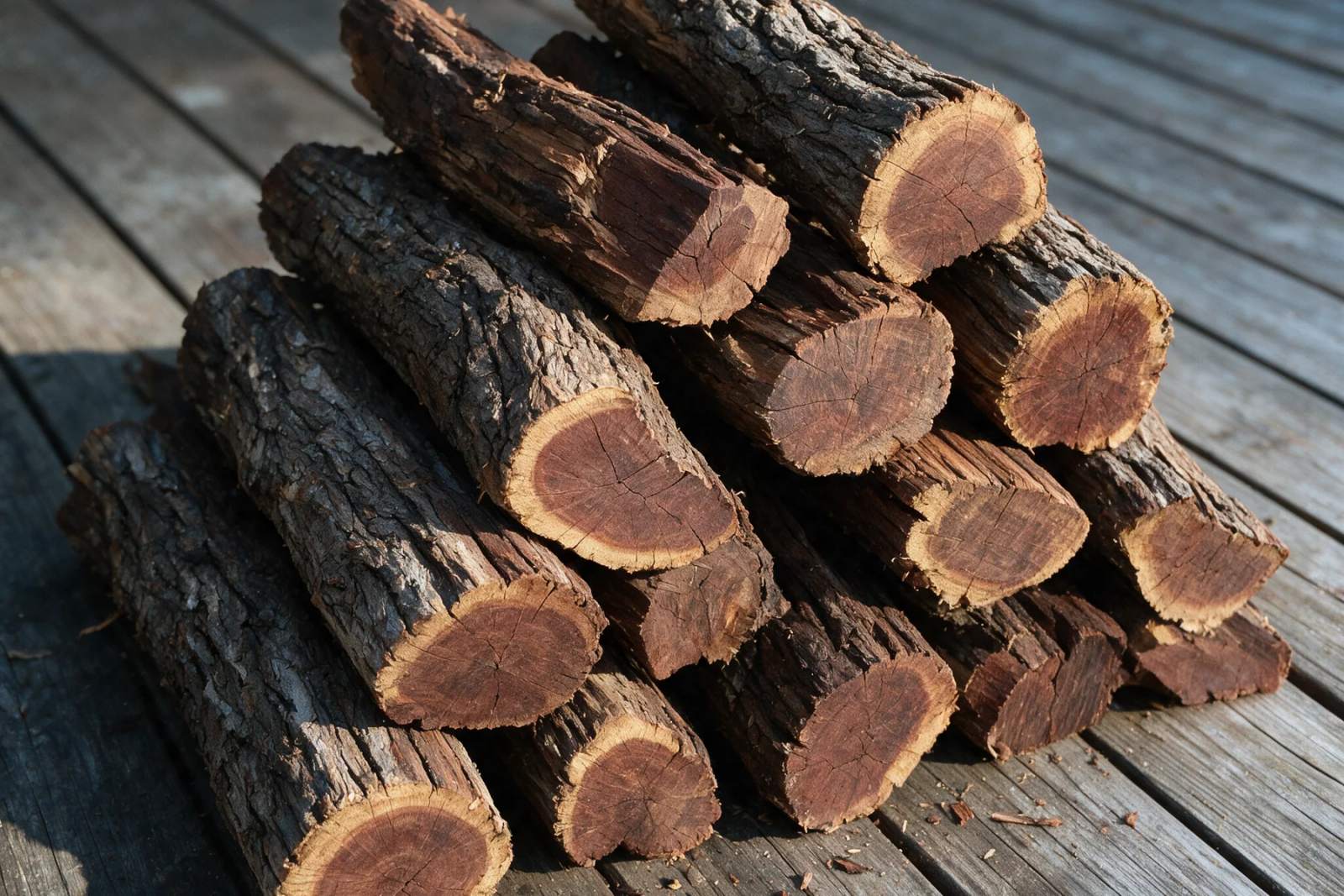
Kameeldoring is the king of braai wood for one simple reason: it’s incredibly dense. That density means it burns hotter and longer than the usual braai woods, and it leaves coals that hold their heat right through a long, slow braai. The trade-off is that it takes a while to get going, so give it good kindling and a bit of patience. Our Kameeldoring is always bone dry and ready to burn, and we deliver it in Paarl and Wellington.
What is Kameeldoring?
Kameeldoring is the camel thorn, Vachellia erioloba, which you’ll still see listed under its old name, Acacia erioloba. It’s a hardy thorn tree of the deep, dry sandy soils of southern Africa, the Kalahari included. You might also hear it called giraffe thorn, and that’s the clue to the name: the “kameel” in Kameeldoring is the giraffe (kameelperd in Afrikaans), which browses the tree’s high leaves. No camels involved.
What matters at the braai is the wood. The heartwood is dark reddish-brown, very hard and remarkably heavy. The Wood Database lists dried camel thorn as denser than water, which only a handful of woods can claim. Hold a piece of Kameeldoring in one hand and a piece of pine in the other and you’ll feel the difference straight away. Everything braaiers love about it comes back to that weight.
Why braaiers rate it so highly
Bone dry and ready to burn
Wet wood has to boil off its water before it can burn properly. That’s why it hisses, smokes and sulks, and gives you less heat for your trouble. The US EPA’s Burn Wise programme says wood burns best below 20% moisture. Our Kameeldoring braai wood is always bone dry, so it’s ready for the fire as soon as it’s delivered.
Very hot, very long
Kameeldoring burns seriously hot, and it keeps going. Daily Maverick’s rundown of fireplace and braai wood says hardwoods like Kameeldoring burn much hotter and much longer than Blue Gum and Black Wattle. At the braai, that means one well-built fire carries you from the first chops to the last wors without you having to feed it all the time.
World-class coals that hold their heat
This is the real reason people go looking for Kameeldoring. Dense wood makes dense coals. They glow hot and even, burn down slowly and hold their heat long after lighter coals have gone grey and tired. That gives you steady heat for thick chops and steak, a second round of wors when the neighbours pitch up, or a potjie that needs to tick over for hours.
Dense means slow to catch
The flip side of all that density: Kameeldoring doesn’t flare up like pine or Rooikrans. Put a big chunk on a weak little flame and it’ll just sit there. Give it a proper start, though, and it will reward you.
Houtboer tip: Build the fire around a generous core of dry kindling and firelighters, with your thinnest Kameeldoring pieces closest to the flame. Once those catch, the big pieces follow. If your logs are on the chunky side, split some of them smaller just for the start.
Big braai coming up? WhatsApp us about Kameeldoring and we’ll sort you out.
How to braai with Kameeldoring
Packing the fire
A teepee works well. Put firelighters and kindling in the middle, lean thinner pieces of Kameeldoring around them and stand the bigger pieces on the outside. Leave gaps between them. Air is what gets dense wood going, so don’t pack it tight, and don’t keep poking at it once it’s lit.
Knowing when the coals are ready
Kameeldoring takes longer than lighter woods to burn down to coals, so light the fire earlier than you think you need to. The coals are ready when the flames have died down and the wood has broken into glowing coals under a coat of grey-white ash. Spread them out, keep a hotter side and a cooler side, and use the hand test over the grid to judge the heat. We go through all of that step by step in our guide to making perfect braai coals.
Long braais and potjies: keep a feeder fire going
For a long afternoon, a big crowd or a potjie, keep a small fire going on one side of the braai and rake fresh coals across as the first lot fades. Kameeldoring is made for this. Each piece keeps making coals for a long time, so you top up now and then instead of babysitting the fire all afternoon.
Kameeldoring vs Rooikrans
Rooikrans is the Western Cape’s classic braai wood. It’s Acacia cyclops, an Australian wattle that has made itself very much at home along the Cape coast. Rooikrans is lighter than Kameeldoring, so it catches more easily, gets to coals sooner and makes good braai coals.
Kameeldoring is the heavyweight. It’s harder to light, but it burns hotter and longer, and its coals last.
So which one? It depends on the braai:
- A quick weeknight braai with a few chops and wors: a lighter wood that gets to coals quickly does the job.
- A long Saturday braai, a big group, thick cuts or a potjie: that’s Kameeldoring territory.
One honest note: we don’t sell Rooikrans. If you love how it braais, try our Black Wattle instead. It’s our economical braai wood, it makes decent coals and it performs very much like Rooikrans. You can also use both: build the fire with Black Wattle and add Kameeldoring for staying power. We put the two wattles head to head in our Rooikrans vs Black Wattle comparison, and our braai wood page sets Kameeldoring and Black Wattle side by side.
Kameeldoring indoors: closed-combustion stoves
Kameeldoring isn’t only for the braai. In a closed-combustion stove it’s great for long, hot burns through the night: get it going before bed, set the air the way your manual says, and the heat keeps coming while you sleep.
But respect the heat. Kameeldoring burns very hot, and too much heat is hard on a stove. Daily Maverick’s article warns that burning nothing but hardwoods like Kameeldoring can damage the inside of a closed unit over time, and has even been known to crack the glass. Fireplace Services explains what overfiring does: cracked firebricks, warped steel, air-wash trouble that keeps blackening the glass, and a warranty that may not cover damage from repeated overfiring.
So:
- Don’t overload the firebox. Kameeldoring throws a lot of heat, so a smaller fire than you’re used to is plenty.
- Use the air controls. Don’t run the stove flat out for hours on end.
- Follow your stove’s manual. The manufacturer’s guidelines come first, every time.
- Consider mixing it with Blue Gum, so the stove isn’t burning Kameeldoring alone.
Houtboer tip: Mix your woods in the stove. Let Blue Gum do the everyday work and add Kameeldoring when you want the fire to last through the night.
For the full rundown, see our fireplace and stove wood page and our guide to the best wood for closed-combustion stoves.
Why Kameeldoring is sold by weight
Kameeldoring logs are natural and vary widely in size and shape: some thick and knotty, some twisted, some slim. Counting pieces would never be fair when no two pieces are alike, so we sell Kameeldoring by weight. Our Blue Gum and Black Wattle are sold by piece count.
For current options, chat to us on WhatsApp. Tell us whether it’s for the braai or the stove and where you are, and we’ll take it from there. We deliver in Paarl, Wellington, Val de Vie and Pearl Valley in the Western Cape, and in Klapmuts and Franschhoek for an additional fee.
Questions we get about this
Is Kameeldoring a hardwood?
Yes, and a very dense one. Camel thorn heartwood is dark reddish-brown, hard and heavy, which is exactly why it burns so hot and so long and leaves such good braai coals.
Is Kameeldoring good for a fireplace or stove?
Yes, especially in a closed-combustion stove when you want a long, hot burn through the night. It burns very hot, so don’t overload the firebox, use the air controls and follow your stove’s manual. It’s also worth mixing it with Blue Gum, so the stove isn’t burning Kameeldoring alone. For everyday indoor fires, Blue Gum is our pick: it burns hot and clean, with little ash.
Does Kameeldoring need seasoning?
Not ours. Our Kameeldoring is always bone dry and ready to burn straight away.
Kameeldoring or Rooikrans?
Rooikrans catches more easily and gets to coals sooner. Kameeldoring is denser, so it burns hotter and longer and its coals hold their heat for longer. We don’t sell Rooikrans. If you like it, try our Black Wattle: it’s economical, with decent coals, and performs very similarly.
Why is Kameeldoring sold by weight?
Kameeldoring logs are natural and vary a lot in size and shape, so weight is the fairest way to sell it. Chat to us on WhatsApp for current options.