
Rooikrans vs Black Wattle: an honest braai wood comparison
Two Australian wattles, one Cape braai tradition. Here’s how they really compare, and why our Rooikrans-style braai wood is Black Wattle.
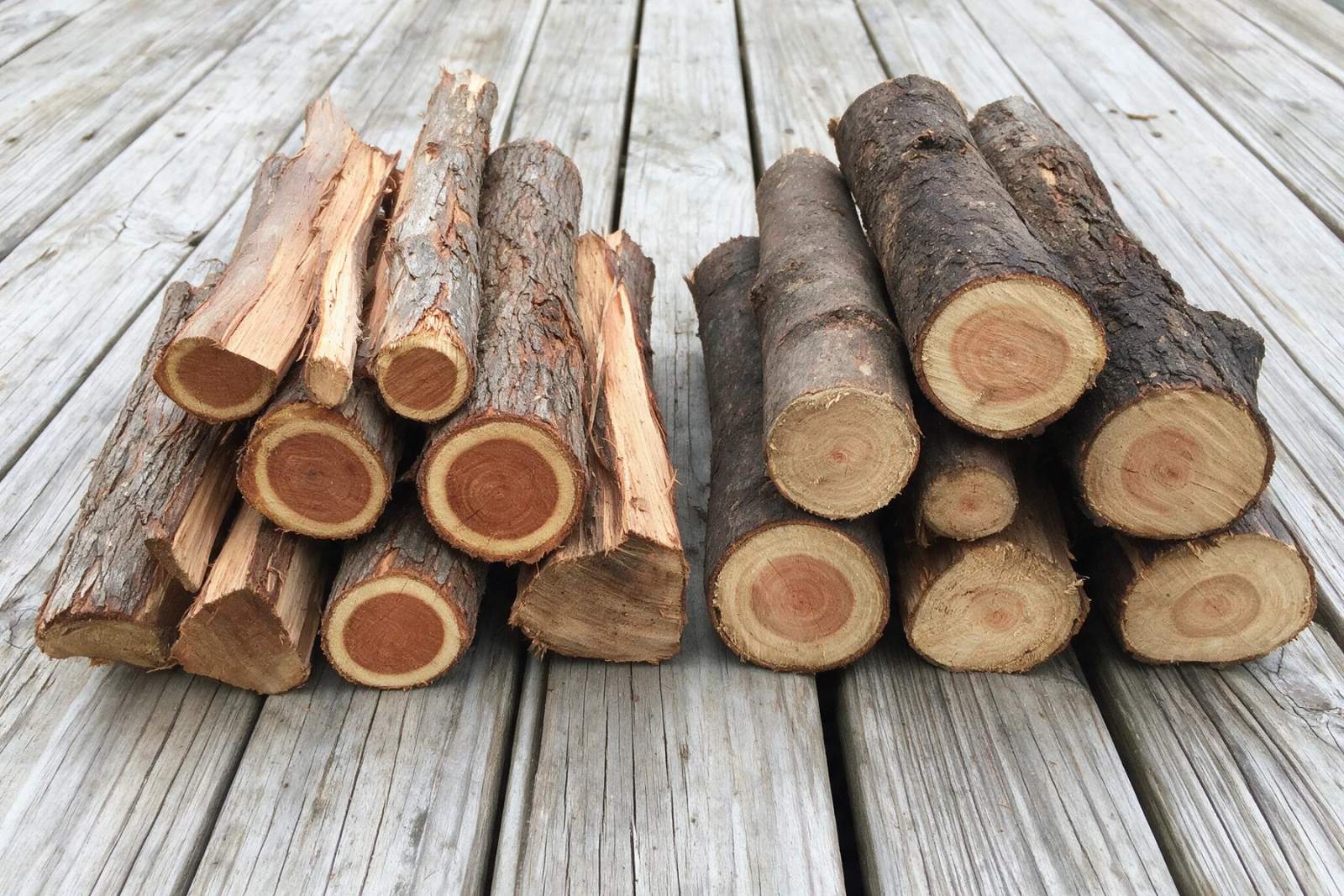
Rooikrans vs Black Wattle? They’re close cousins, and on the braai they behave much the same. Both are Australian wattles, and both burn down to proper coals for the wors and chops. Rooikrans has the bigger name in the Cape. Black Wattle performs very similarly, it’s the economical one, and it’s the one we deliver in Paarl and Wellington. So let’s be clear from the start: we don’t sell Rooikrans. If you’re a Rooikrans person, our Black Wattle braai wood is the one to try.
The quick verdict
- They’re more alike than different. Same family of trees, same kind of fire, same job under the grid.
- Rooikrans is the Western Cape’s classic braai wood, known for catching easily and for coals that last.
- Black Wattle makes decent coals, performs very similarly to Rooikrans, and is the more economical braai wood.
Meet the two wattles
Rooikrans (Acacia cyclops)
Rooikrans grows wild along the coast of Western and South Australia. It was brought to the Cape in the 1800s to hold shifting dunes in place, and it settled in far too well. Its English names, red-eyed wattle or red eye, come from the bright red ring around each black seed. The Afrikaans name says the same thing: rooikrans means “red wreath”.
Today it’s one of the worst invaders of coastal fynbos. Rooikrans is a Category 1b species on the national list of invasive species under NEMBA, the Biodiversity Act. That means it has to be controlled and may not be planted. CapeNature lists it as the top invasive alien plant in the Western Cape.
On the braai, though, it’s a legend. Plenty of Capetonians grew up braaiing on Rooikrans, and when Weg magazine put braai wood to the test, Rooikrans came out as the best of the local woods: it catches easily when it’s dry and leaves good coals that last.
Black Wattle (Acacia mearnsii)
Black Wattle is another Australian acacia. It came to South Africa in 1871, partly as a source of firewood, and today it’s grown in commercial plantations for its tannin-rich bark and its timber. The wood is moderately dense, splits easily and burns well, which is exactly what you want from braai wood.
It’s on the NEMBA list too, but in a different category. Black Wattle is Category 2, which means it may only be grown where it’s allowed, such as in plantations, and it must not spread beyond them. Ours is harvested from sustainable plantations.
Rooikrans fan? Give our Black Wattle a go: WhatsApp us and we’ll help you choose.
Rooikrans vs Black Wattle, head to head
Here’s how the two compare where it counts. No lab numbers, just how they behave in a braai on a Saturday afternoon.
| Rooikrans | Black Wattle | |
|---|---|---|
| On the braai | A Cape braai legend | Performs very much like Rooikrans |
| Coals | The classic Cape braai coals, long-lasting | Decent coals |
| Best for | The traditional weekend braai | Everyday braais and big gatherings, economically |
Lighting
Both wattles light more readily than a dense hardwood like Kameeldoring, which needs a generous bed of kindling to get going. For either wattle, build a small teepee of kindling and firelighters, leave gaps so the fire can breathe, and give it time. Patience beats poking.
Coals and heat
Coals are why you braai on wattle and not on Blue Gum. Blue Gum, or bloekom, is great fireplace wood, but it gives lots of flame and very few coals, so it’s not much use under a grid. Both wattles burn down to a proper bed of hot coals. Rooikrans has the reputation; Black Wattle does the job in very much the same way. Not sure when to put the meat on? Our guide to making perfect braai coals covers the hand test and when to spread the coals.
Smoke and long braais
Smoke comes from a fire that isn’t burning hot and clean yet. Give it a hot start and plenty of air, and once either wattle is burning properly, the smoke settles down.
For a long braai or a potjie, keep a small feeder fire going on the side and rake fresh coals across as you need them.
Tips for a good wattle fire
Whichever wattle you braai on, a few good habits make the fire easier:
- Start with dry kindling. Use plenty of dry kindling and firelighters, and get that burning well before the bigger pieces go on.
- Go thin first. Split a few pieces thinner for the start. They catch faster and help the thicker ones along.
- Give it air. Don’t pack the braai tight. Leave gaps so the fire can breathe.
- Try lighting from the top. Bigger pieces underneath, thinner ones on top, kindling and firelighters on top of that. The fire burns downwards and lights the wood below as it goes.
- Light up early. Give the fire time to burn down to proper coals before the meat goes on.
For more on packing the fire, from the teepee to the log cabin, see our guide to perfect braai coals.
Why Black Wattle is our braai pick
Our braai wood is Black Wattle and Kameeldoring. We don’t sell Rooikrans, and here’s why Black Wattle is the one we point Rooikrans fans to:
- It does the Rooikrans job. Decent coals, and it performs very much like Rooikrans.
- It’s plantation-grown. Our Black Wattle is harvested from sustainable plantations.
- It’s the economical braai wood. Sold by piece count, and good for everyday braais and for the big gatherings where you need plenty of fire.
When the braai is a big one
For a long braai, a potjie or a Heritage Day crowd, team it up with Kameeldoring. Kameeldoring is bone dry and ready to burn, burns very hot and very long, and leaves world-class braai coals. It’s denser and slower to catch, which is exactly why the two work well together. Kameeldoring is sold by weight, because the natural logs vary so much in size and shape.
Houtboer tip: Get the fire going with Black Wattle, then feed in Kameeldoring once the wattle is burning strongly. The wattle gets things moving, and the Kameeldoring carries the braai deep into the evening.
Delivery in Paarl and Wellington
We deliver Black Wattle and Kameeldoring in Paarl, Wellington, Val de Vie and Pearl Valley, and in Klapmuts and Franschhoek for an additional fee. Want both braai woods side by side? Have a look at our braai wood for Paarl and Wellington. Rooikrans fan and curious about Black Wattle? Chat to us on WhatsApp for current options, tell us what you’ve got planned, and we’ll tell you straight which wood suits your fire.
Questions we get about this
Is Black Wattle good braai wood?
Yes. Black Wattle makes decent braai coals and performs very similarly to Rooikrans, and it’s our economical braai wood.
Do you sell Rooikrans?
No, we don’t sell Rooikrans. Our Rooikrans-style braai wood is Black Wattle, which performs very similarly. For a long braai with world-class coals, we also deliver Kameeldoring in Paarl and Wellington.
Is Black Wattle invasive in South Africa?
Yes. Black Wattle is an Australian acacia listed as a Category 2 invasive species under NEMBA, the Biodiversity Act. That means it may only be grown where it’s allowed, such as in plantations, and it must not spread beyond those areas. Our Black Wattle is harvested from sustainable plantations.
Can I use Black Wattle in my fireplace?
It will burn indoors, but our pick for fireplaces and closed-combustion stoves is Blue Gum, which burns hot and clean with minimal ash. Keep the Black Wattle for the braai, where its coals count.