
The best wood for closed-combustion stoves and fireplaces
Blue Gum for everyday fires, Kameeldoring for long, cold nights, and how to keep your stove glass clean and your stove in one piece.
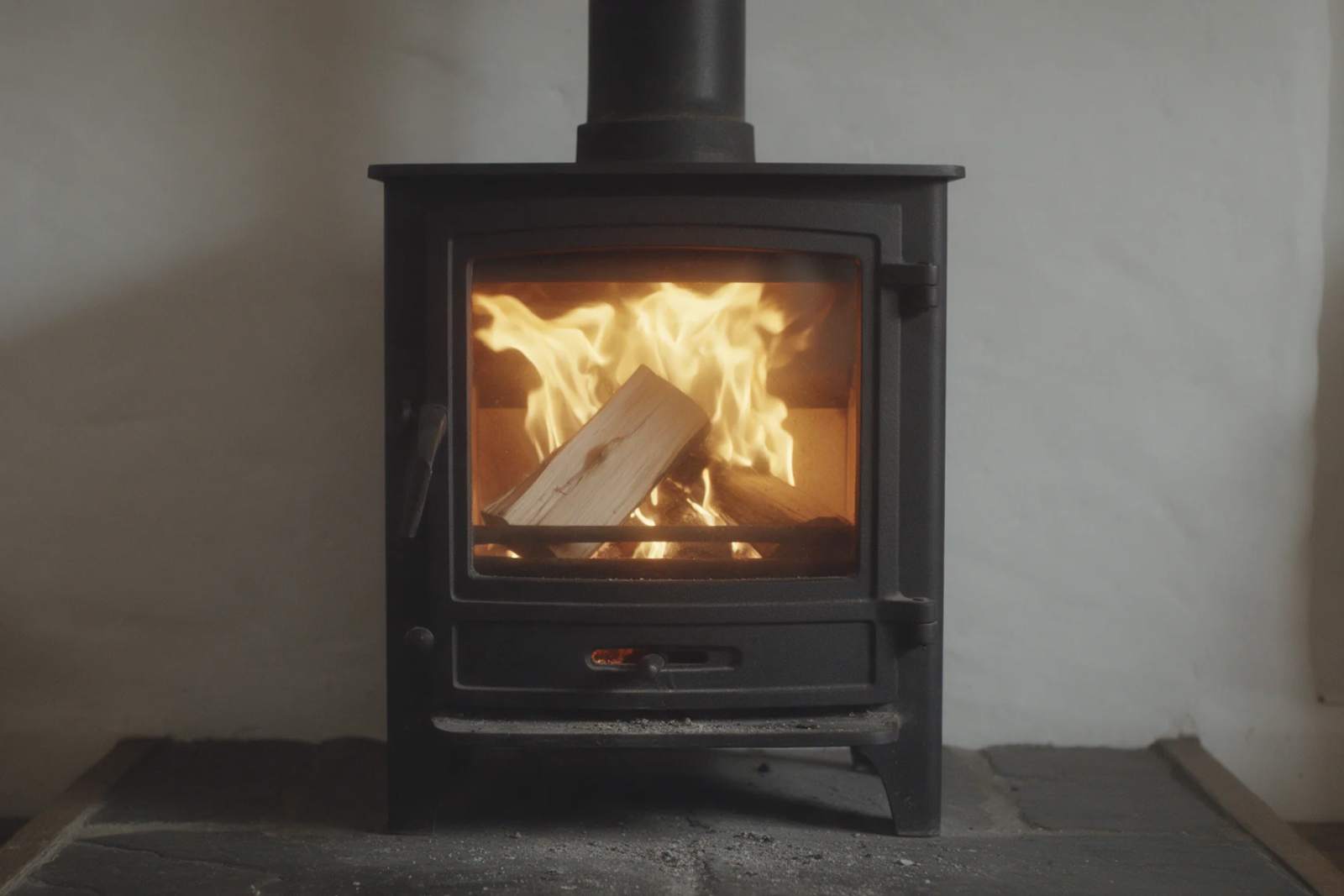
If you’ve got a closed-combustion stove or an indoor fireplace, here’s the straight answer on the best wood to burn: Blue Gum is your everyday wood. It burns hot and clean and leaves very little ash. Kameeldoring is the one for long, hot overnight burns, as long as you treat it with respect, because it burns very hot. Mix the two and you get the best of both. Whatever you burn, your stove’s manual always has the final say.
What makes the best wood for a closed-combustion stove
A closed-combustion stove burns wood behind a shut glass door, in a sealed firebox where you control the air. That makes it far more efficient than an open fire, but also fussier about what you feed it. Two things matter.
Dense hardwood
Dense wood packs more heat into every piece and burns for longer, so you open the door less. That’s why hardwoods are the go-to for stoves, and why resinous softwoods like pine don’t belong in there as the main fuel.
The right air
Most stoves have air controls, usually a primary air inlet plus an “airwash”: secondary air that sweeps warm air down the inside of the glass and helps keep it clear. Light up with the air wide open, let the fire get properly hot, then turn it down bit by bit. Just don’t choke it into a smoulder: the EPA points out that for most stoves a smouldering fire is neither safe nor efficient. Here’s a good check from the EPA’s Burn Wise safety tips: about 20 minutes after lighting, step outside and look at your chimney. If it’s still smoking, the fire may be short of air, or the wood too wet.
Blue Gum: the everyday stove and fireplace wood
Blue Gum is our pick for indoor fireplaces and closed-combustion stoves. It burns hot and clean, with minimal ash and coals, so cleaning out the stove is a quick job. South African fireplace maker GC Fires calls Blue Gum a popular choice in South Africa. Ours is harvested from sustainable plantations.
What about Black Wattle? It’s our economical braai wood. For the fireplace and the stove, we point people to Blue Gum.
Kameeldoring: the overnight burner
Kameeldoring is a different animal. It’s very dense, always bone dry and ready to burn, and it burns exceptionally hot for a very long time. That makes it great in a closed-combustion stove when you want a long, high-heat burn that carries you through a cold night. And because it’s bone dry, it doesn’t hiss and smoke the way wet wood does.
Respect the heat
That heat is the whole point, and it’s also the catch. A stove that runs too hot for too long is “overfiring”, and Fireplace Services’ guide to overfiring lists the damage: baffles can warp, steel bodies can bend, cast iron can crack, and the airwash that keeps your glass clear can be damaged. GC Fires adds that overfiring shortens your fireplace’s life and can void the warranty.
So with Kameeldoring:
- Don’t overload the firebox. Stay under the maximum fuel load in your manual.
- Top up on embers, not while the fire is still roaring.
- Use the air controls to keep the fire in check once it’s going.
- Know the warning sign. If any part of the stove or flue pipe glows red, it’s far too hot. Turn the air down and don’t add more wood.
- Got a stove thermometer? Keep the needle in the range your manufacturer gives.
The mix trick: Kameeldoring plus Blue Gum
The firewood suppliers Daily Maverick spoke to warn that if you burn nothing but very dense hardwoods like Kameeldoring in a glass-fronted unit, the coals get so hot that over time they can damage the inside of the unit and even crack the glass. Some people mix it with Blue Gum in their enclosed units, they say, and that’s our advice too.
Build your fire on Blue Gum, then add a few pieces of Kameeldoring once it’s going well. The Blue Gum burns hot and clean, and the Kameeldoring adds long-lasting coals for the night.
Houtboer tip: For the last top-up before bed, rake the coals forward, put a few pieces of Kameeldoring on a little Blue Gum, and let it burn with the air open until it has properly caught. Only then turn the air down, and never all the way. A lively fire that’s turned down gently burns cleaner and gives you more heat than one you’ve smothered.
Open fireplace vs closed-combustion: what changes
An open fireplace is the old-school kaggel: no door, flames in the room, and a lot of the heat going straight up the chimney. A closed-combustion stove shuts the door on all that and puts you in charge of the air, so more of the heat stays in the room and you get through less wood for the same warmth.
What that means for your wood:
- In an open fireplace, Blue Gum’s lively flames are exactly what you want. Kameeldoring works beautifully too, with a long-lasting bed of glowing coals, and there’s no glass door or baffle to overheat. Keep a spark guard in front either way.
- In a closed-combustion stove, the rules above matter more: dense wood, sensible loading and the right air. A stove is less forgiving of a smoky, smouldering fire (black glass, a tarry flue) and of too much heat (overfiring).
Why is my stove glass going black?
Usually it’s a fire that’s running too cool, because the air was turned down too soon or the wood is too wet. A cool fire doesn’t burn its smoke off, and the tar ends up on your glass and in your flue. GC Fires puts it bluntly: wet wood gives you a smoky fire, blackened glass, up to 50% less heat and nearly double the wood use.
The usual culprits, and the fixes:
- Air turned down too far, too soon. The airwash needs heat to keep the glass clear, so let the fire get going before you close it down.
- A smouldering overnight fire. A choked fire is a sooty fire. See the bedtime tip above.
- Logs against the glass. They leave dark patches. Load them back from the door.
- Wood that’s too wet. Burn drier wood, or get the fire hotter with more dry kindling and the air open.
Clean the glass only when it’s cold, with a stove-glass cleaner or the old trick of damp newspaper dipped in fine ash. Check your manual first.
Never burn these
Your stove isn’t a rubbish bin. Keep these out of the firebox:
- Pine as your main fuel. Daily Maverick’s experts warn its resin can, over time, become a real fire hazard in the chimney. Keep it for kindling.
- Treated, painted or varnished wood, plywood and chipboard. The EPA warns these can release toxic or harmful chemicals when burned, and may damage your stove.
- Pallets, crates and tarred wood. They’re all on GC Fires’ never-burn list.
- Plastic and household rubbish.
- Petrol, paraffin or any liquid fuel to get it going. Never. Use firelighters and dry kindling.
Safety basics for every winter
- Have your stove and chimney inspected and swept once a year. The EPA recommends an annual inspection of your stove and chimney. A sweep before the first cold snap clears out the tar and soot.
- Fit smoke and carbon monoxide alarms on every floor and outside the bedrooms, as the EPA advises. You can’t smell carbon monoxide.
- Ash goes in a covered metal container, outside, on a surface that can’t burn. Ash can hide live embers for longer than you’d think.
- Check the door seal and glass before the first fire of the season. A worn rope seal lets in extra air, and that makes the fire harder to control.
- Your manual wins. Where this guide and your manufacturer’s instructions disagree, follow the manual.
We deliver Blue Gum (sold by piece count) and Kameeldoring (sold by weight) in Paarl, Wellington, Val de Vie and Pearl Valley, Western Cape, and in Klapmuts and Franschhoek for an additional fee. Have a look at our fireplace and stove wood, or send us a WhatsApp, tell us what you’re burning in, and we’ll help you pick the right mix.
Questions we get about this
Can I burn Kameeldoring in a closed-combustion stove?
Yes, and it’s great for long, hot overnight burns. It burns very hot, though, so don’t overload the firebox, use the air controls and follow your stove’s manual. Mix it with Blue Gum for a steadier fire that’s easier on the stove.
Why does my stove glass turn black?
Usually the air was turned down too far, too soon. The airwash needs heat to keep the glass clear, so start hot with the air open, then turn it down gradually, never to a smoulder. Wet wood does it too: it burns cool and smoky, and the tar ends up on the glass.
Is pine okay for a fireplace?
Only as kindling. Pine is light and full of resin, and over time that resin can build up in the chimney and become a fire hazard. Use a dense hardwood like Blue Gum or Kameeldoring as your main fuel.
What’s the best wood for an overnight fire?
Kameeldoring. It’s dense, bone dry and burns hot for a very long time. In a closed-combustion stove, add it to a Blue Gum fire that’s going well, let it catch properly with the air open, then turn the air down gently, never all the way. Don’t overload the stove.