
How to store firewood and get ready for winter
Off the ground, roof on, sides open: a woodpile that survives a wet Boland winter, plus a checklist for before the first cold front.
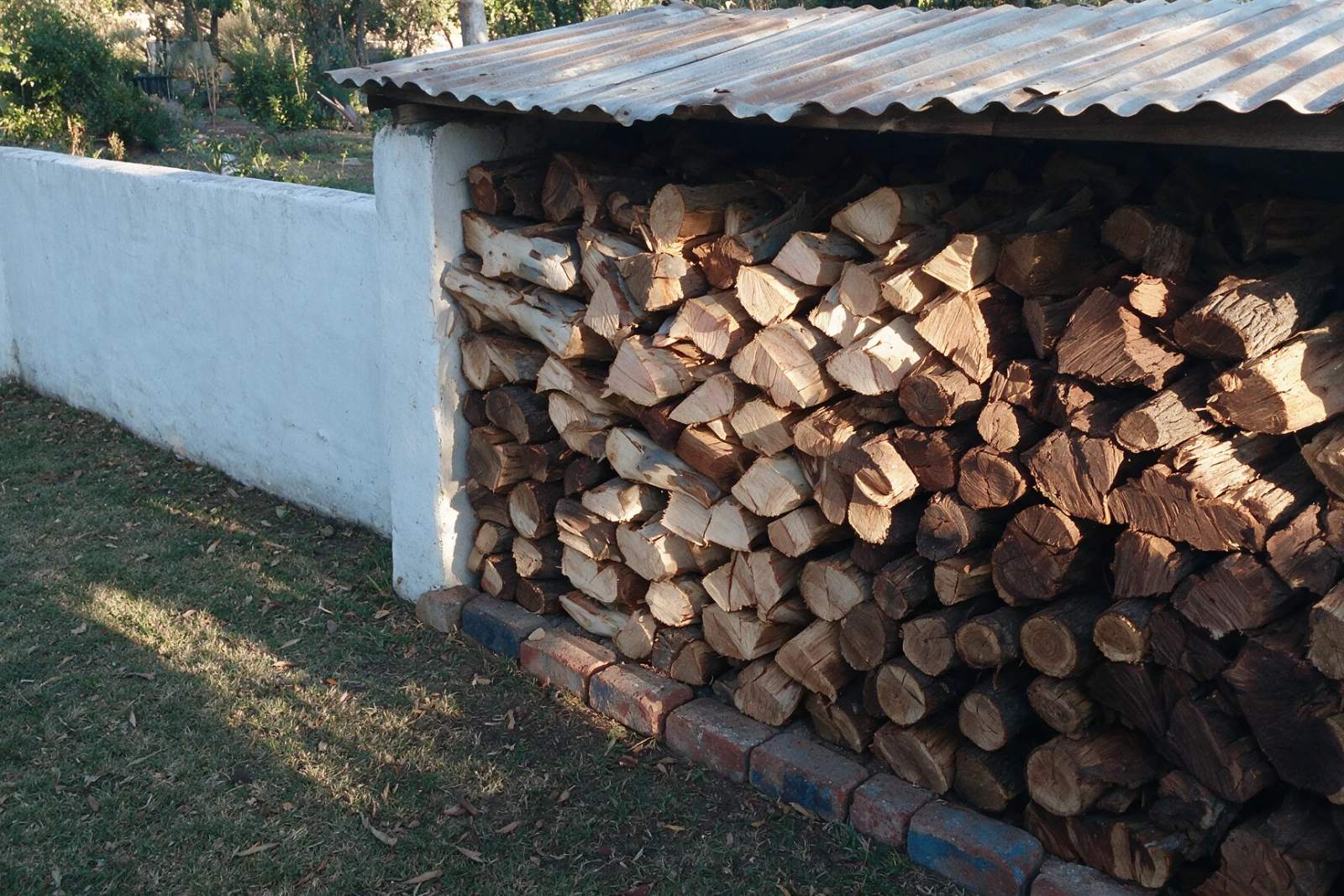
To store firewood for winter, keep it outside on bricks or pallets so it’s off the ground, in a spot that gets sun and wind, a little way from the house, and cover only the top. Bring just a day or two’s worth indoors at a time. And in Paarl and Wellington, have the whole stack under cover before the winter rain sets in, roughly from May.
Here’s how to set that up, plus a short checklist to get your fireplace or stove ready before the first cold front.
Why firewood storage matters
Firewood that sits in the rain or on wet ground soaks up water, and wood under a tarp wrapped all the way round can’t dry out. Wet wood is miserable to burn. The fire has to boil that water off before it makes real heat, so you get hissing, smoke and a lounge that never quite warms up. GC Fires, a South African fireplace maker, says wet wood causes a smoky fireplace, blackened glass, up to 50% less heat and nearly double the fuel use.
A good woodpile does two jobs: it keeps the rain off, and it lets the wind dry out any damp that does get in.
How to store firewood outside: the perfect woodpile
You don’t need a shed. A good outdoor stack gets four things right.
Get it off the ground
Wood lying on soil or grass draws up moisture from below and starts to rot from the bottom. It’s also an open invitation to termites. University of Illinois Extension advises stacking firewood off the ground, because that makes it harder for insects like termites to get in. Old pallets, a row or two of bricks or a simple steel rack all work, as long as air can move underneath.
Cover the top, leave the sides open
This is the one most people get wrong. The US EPA’s advice is to store wood outdoors, off the ground, with only the top covered, because covering the sides traps the moisture in. A tarp pulled tight over the whole stack turns it into a sauna: the wood sweats, goes mouldy and stays damp right through winter.
The best cover is a proper little roof: an old sheet of corrugated iron, a lean-to against a boundary wall (not the house), or a tarp tied over the top so it hangs only a short way down the sides.
Houtboer tip: Give the roof a slight slope and let it overhang the stack a little on every side. The rain then runs off away from the wood instead of dripping onto the top row, and a howling north-wester has a harder time driving it in.
Keep it away from the house walls
Don’t stack firewood flat against the house. It blocks the airflow on one side, keeps the wall damp, gives termites a handy bridge to your door frames and roof timbers, and gives rats and spiders a shortcut indoors. Illinois Extension suggests keeping woodpiles at least three feet (roughly a metre) from any building, and further is better if you have the space: an Ohio State University Extension article notes that some experts recommend six to nine metres from the house. On a normal town plot, a spot along the back fence or boundary wall usually does the job. Keep it clear of the braai area too, where stray sparks land.
Give it sun and wind
Sun warms the wood and wind carries the moisture away, so you want both. Down here in the southern hemisphere the north side gets the most sun, so pick an open spot that catches sun for most of the day. Avoid damp corners, the shady side of the house and low spots where water stands after rain. Rows one piece deep, with a gap between them, dry far better than one big heap, and a top layer laid bark side up sheds the rain.
Indoors: a day or two’s worth, away from the fire
A dry supply inside is lekker on wet July evenings, when nobody wants to run out to the woodpile in the rain. Just keep it small. Illinois Extension recommends bringing in only a day or two’s worth at a time: the longer wood sits in a warm house, the more likely it is that whatever lives in it wakes up and wanders across your lounge floor.
- Keep it in a log basket or rack well clear of the fireplace or stove. Your stove’s manual lists the clearance it needs from anything that can burn. Wood packed against a hot stove, or on top of it, can catch alight.
- A covered stoep, the garage or a box by the back door all work for tomorrow’s wood.
- Top it up from the driest, most sheltered part of the outdoor stack.
Storing Kameeldoring: keep bone dry wood bone dry
Kameeldoring is always bone dry and ready to burn, so your only job is to keep it that way.
The same rules apply: off the ground, top covered, sides open. We’d give it its own spot, so it’s easy to grab for a long overnight fire in the stove or a proper braai with world-class coals.
One thing to remember: Kameeldoring burns very hot. In a closed-combustion stove, don’t overload the firebox, and follow your stove’s manual. Our guide to the best wood for closed-combustion stoves has more, including why we suggest mixing it with Blue Gum.
Critters in the woodpile
A woodpile nobody touches for months becomes a home. Spiders, scorpions, rats and mice move in, and where there are rodents and lizards, snakes follow. The African Snakebite Institute lists firewood among the places snakes take refuge in a garden, along with corrugated iron and building rubble. Termites are the slower threat: they’re not after your fire, they’re after your house. Most other bugs that crawl out of firewood are just a nuisance: Illinois Extension says the wood in our homes and furniture is too dry for them to live in.
A few easy habits keep it under control:
- Wear gloves, and don’t push your hand into gaps you can’t see into.
- Take wood from the top. Never reach in underneath the stack.
- Keep it moving. Use from the stack regularly, so no corner sits untouched for months.
- Keep the area tidy. Cut the grass around the stack and don’t let it turn into a dumping spot for rubble.
- Leave the critters outside. Give each piece a knock and a look before it goes into the basket.
Houtboer tip: When you lift a piece off the stack, tilt it up from the far side first, so the wood is between you and whatever might be underneath. It’s an old farm habit, and a good one.
Your winter-prep checklist
Do these before the first cold front, not on the night it arrives:
- Get the woodpile under a roof before the winter rain sets in, with the sides left open.
- Have the chimney swept and the stove checked. The EPA recommends having your wood-burning appliance and chimney inspected every year.
- Check the stove door seal and glass. A worn rope seal lets in extra air and makes the fire hard to control, and cracked glass needs replacing before you light up.
- Test your smoke and carbon monoxide alarms. The EPA advises fitting smoke and CO detectors on every floor of the house and outside each bedroom.
- Stash dry kindling and firelighters in a closed box, somewhere the rain can’t reach. It’s what gets a slightly stubborn fire going.
- Get a metal ash bucket with a lid. Ash that looks dead can still hide live embers. The EPA says to put ashes in a covered metal container and keep it outdoors on a non-flammable surface.
Paarl and Wellington winters: beat the first cold front
Paarl has a Mediterranean climate: hot, dry summers and most of the year’s rain in winter, roughly May to August, with June usually the wettest month. Wellington, just up the road, follows the same pattern. Once the winter cold fronts start rolling in off the Atlantic, the north-westers bring rain, sometimes for days on end, and a woodpile without a roof can stay soggy until spring.
So the timing is simple:
- Summer: set up the woodpile, off the ground with a roof on.
- Autumn, around March and April: check the stack, tie down the roof, set up a dry spot by the back door for the next day or two’s wood, and get the chimney sorted.
- Winter: keep the top covered, use the driest wood first and keep the indoor basket small.
We deliver firewood in Paarl, Wellington, Val de Vie and Pearl Valley, Western Cape, and in Klapmuts and Franschhoek for an additional fee. Questions about your fire? Send us a WhatsApp and we’ll tell you straight.
Questions we get about this
Can I cover firewood with a tarp?
Yes, but only the top. Tie it over the stack like a roof so it hangs a short way down the sides, and leave the rest open to the wind. A tarp wrapped all the way round traps moisture, so the wood sweats, goes mouldy and can start to rot.
How far from the house should I stack firewood?
Never flat against the wall. University of Illinois Extension suggests keeping woodpiles at least three feet (roughly a metre) from any building, and further is better if your yard has the space. That keeps air moving round the stack and doesn’t give termites and other critters an easy bridge into the house.
Does firewood go off?
Not if it’s stored well. Off the ground, with a roof on and the sides open, firewood keeps for a good few years. Wood left on wet ground or under a sealed-up tarp goes mouldy and starts to rot, and rotten wood burns poorly.
Should I keep firewood inside?
Only a day or two’s worth at a time. The rest belongs outside under a roof where the air can move. Indoors, keep it in a basket or rack well clear of the fireplace or stove, and top it up from the outdoor stack as you burn it.
My firewood got rained on. Is it ruined?
No. If only the outside got wet, sun and wind will dry the surface again once the weather clears, as long as the stack is off the ground with open sides. Burn from the most sheltered part of the stack in the meantime, and keep the top covered from now on.